
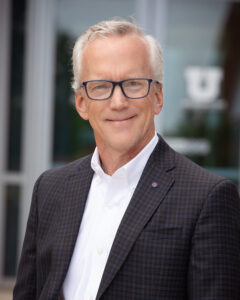
 Dr. Mark Maier, Professor (Lecturer) in the Department of Mechanical Engineering, has received Expert Systems Engineering Professional (ESEP) Certification from INCOSE, the world’s flagship membership organization and professional society dedicated to the discipline of Systems Engineering. These certifications are a globally recognized standard for validating systems engineering expertise.
“The Wasatch Chapter is incredibly proud to have Mark expand the list of Expert SE Professionals in the State of Utah,” said Dr. Pedro Huebner, Director of Systems Engineering Programs at the U and Secretary of INCOSE’s Wasatch Chapter. “He is now a member of a select group, as there are only 6 ESEPs on the Wasatch Chapter’s roster. He joins 34 CSEPs and 76 ASEPs who practice the discipline throughout the Beehive State. As his colleague at the U, I am excited to teach alongside the newest ESEP around!”
The ESEP process requires that an individual demonstrates 20+ years of systems engineering experience and leadership across a variety of specialty areas in the field. Dr. Maier’s largest areas of experience are systems architecting and modeling. He has also played leadership roles in requirements development, test and verification, and validation. Two examples from his most recent work include being lead architect on the Sentinel program at Hill Air Force Base and the technical lead on the NOAA Satellite Observing Systems Architecture (NSOSA) program.
On Sentinel, Dr. Maier worked deeply with Model-Based Systems Engineering (MBSE) technology to firmly define the borders and the external interfaces for a very large system and define its key system level structure. The NSOSA program, in contrast, was a classic example of front-end work, starting with raw stakeholder needs and exploring alternative concepts to find a happy medium between what users wish they could have, what matches organizational priorities, and what is feasible to build.
“I’m a firm believer that all engineers should have a touch of systems engineering in their training,” said Dr. Maier. “Most of us, even those dedicated to particular disciplines, will work on things with a strong systems character. Most everything a mechanical or electrical or even software engineer works on will be integrated into a larger system, and it is the larger system that will deliver value and be worth paying for. Being able to adopt the systems perspective and contribute to the whole is a key in most engineers’ long-term professional development.”
You can learn more about the degrees and certificates offered in systems engineering at the U by visiting the Systems, Industrial, and Management Engineering website.